
Cesarean Section
- Home
- Cesarean Section
Obstetrics
High Risk Pregnancy Ectopic Pregnancy Placenta Issues Cesarean Section Normal Delivery VBAC Painless Vaginal Delivery Preeclampsia Eclampsia Medical Disorders in Pregnancy Hypertensive Disorders in Pregnancy Postpartum Care Ectopic Pregnancy / GTT MTP Early Detection & Treatment Pre-conceptional Counselling Prenatal Care Postpartum Hemorrhage Treatment Antenatal Yoga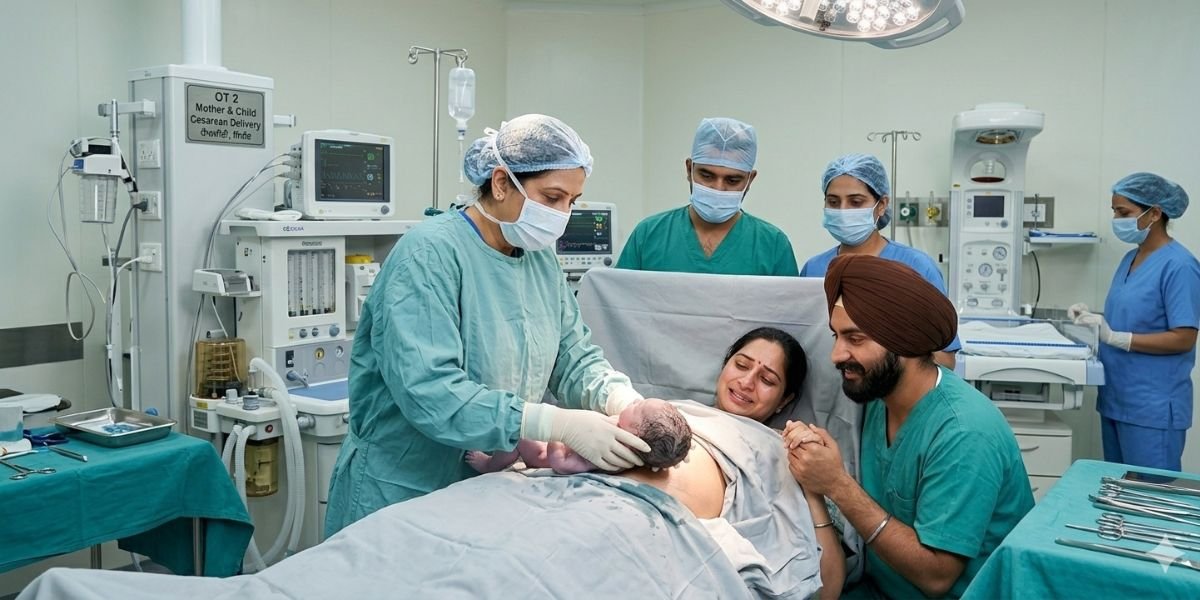
Safe & Personalized Surgical Delivery for Mother and Baby
A Cesarean Section (C-section) is a surgical procedure used to deliver a baby through an incision made in the mother’s abdomen and uterus. It may be planned in advance or performed as an emergency when vaginal delivery may not be the safest option for the mother or baby.
At every stage, the focus is on the safety of both mother and baby, careful monitoring, appropriate surgical planning, and personalized maternity care.
What Is a Cesarean Section?
A Cesarean Section is a method of childbirth in which the baby is delivered through surgical openings made in the abdomen and uterus rather than through the vaginal birth canal.
A C-section may be:
- Planned (Elective) Cesarean Section – scheduled before labor begins.
- Emergency Cesarean Section – performed when an unexpected complication develops during pregnancy or labor and delivery needs to happen promptly.
The decision to perform a Cesarean Section is based on the mother’s health, the baby’s condition, pregnancy history, and circumstances during pregnancy or labor.
When Is a Cesarean Section Recommended?
A Cesarean Section may be recommended when vaginal delivery could present a significant risk to the mother or baby.
Some common situations include:
Baby in Breech or Transverse Position
Normally, the baby’s head is positioned downward near the birth canal. If the baby remains breech or lies sideways (transverse), a Cesarean delivery may be recommended depending on the circumstances.
Placenta Previa
Placenta previa occurs when the placenta partially or completely covers the cervix. In certain cases, vaginal delivery may cause significant bleeding, making Cesarean delivery necessary.
Fetal Distress
Changes in the baby’s heart rate during labor may indicate that the baby is not tolerating labor well. If the situation cannot be safely managed otherwise, an urgent Cesarean Section may be required.
Failure to Progress in Labor
Sometimes labor does not progress despite appropriate management. This may occur when the cervix does not dilate adequately or the baby does not descend as expected.
Previous Cesarean Section
A previous C-section does not automatically mean another C-section is required. Some women may be candidates for VBAC (Vaginal Birth After Cesarean), while others may be advised to have a repeat Cesarean depending on their individual circumstances.
Multiple Pregnancy
In twin or higher-order pregnancies, the position of the babies and other pregnancy-related factors may influence the safest method of delivery.
Certain Maternal Medical Conditions
Some medical or pregnancy-related conditions may make Cesarean delivery safer than vaginal delivery.
Certain Placental or Fetal Conditions
Some conditions involving the placenta, baby’s position, growth, or health may require surgical delivery.
Planned vs Emergency Cesarean Section
Planned Cesarean Section
A planned C-section is scheduled before labor begins when there is a known medical reason that makes Cesarean delivery the preferred option.
Planning allows time for:
- Preoperative assessment
- Blood tests
- Anesthesia consultation
- Discussion of the procedure
- Preparation for hospital admission
- Discussion of recovery and newborn care
Emergency Cesarean Section
An emergency C-section may become necessary when an unexpected problem develops during pregnancy or labor.
Possible reasons include:
- Concerning fetal heart rate changes
- Significant bleeding
- Placental complications
- Failure of labor to progress
- Umbilical cord complications
- Sudden maternal or fetal concerns
The urgency of the procedure depends on the specific clinical situation.
How Is a Cesarean Section Performed?
A Cesarean Section is performed in a hospital operating theatre by an obstetric and surgical team.
Step 1: Preoperative Assessment
Before surgery, the medical team reviews your medical history, pregnancy details, medications, allergies, blood tests, and other relevant information.
Step 2: Anesthesia
Most C-sections are performed using regional anesthesia, such as spinal or epidural anesthesia.
This allows the mother to remain awake while the lower part of the body is numbed.
In certain emergency situations or specific medical circumstances, general anesthesia may be required.
Step 3: Abdominal Incision
The surgeon makes an incision in the lower abdomen. A horizontal incision, commonly called a bikini-line incision, is frequently used when appropriate.
Step 4: Uterine Incision
An incision is made in the uterus to allow delivery of the baby.
Step 5: Delivery of the Baby
The baby is carefully delivered through the uterine and abdominal openings.
The baby’s condition is assessed immediately after birth, and the newborn care team provides any necessary support.
Step 6: Placenta Delivery
After the baby is delivered, the placenta is removed.
Step 7: Closing the Incisions
The uterus and abdominal layers are carefully closed.
The surgical team checks for bleeding and ensures that the mother is stable before transferring her to the recovery area.
What Happens Immediately After a C-Section?
After surgery, the mother is monitored in a recovery area.
The healthcare team checks:
- Blood pressure
- Heart rate
- Bleeding
- Pain
- Urine output
- Surgical wound
- Overall recovery
The baby is also monitored and cared for by the maternity/newborn team.
When medically appropriate, skin-to-skin contact and early breastfeeding can be encouraged.
Recovery After Cesarean Section
A C-section is a major abdominal operation, so recovery takes longer than recovery from an uncomplicated vaginal delivery.
During the initial recovery period, you may experience:
- Abdominal soreness
- Tiredness
- Difficulty moving comfortably
- Incision discomfort
- Vaginal bleeding
- Temporary constipation or bloating
The medical team will encourage safe movement after surgery because early mobility can help reduce certain complications.
Pain medication is provided as required.
Caring for Your C-Section Wound
Keep the incision clean and follow your healthcare team’s instructions.
You should seek medical advice if you notice:
- Increasing redness around the wound
- Swelling
- Pus or unusual discharge
- Worsening pain
- Fever
- The wound opening
- Heavy bleeding
Avoid putting products on the wound unless advised by your healthcare professional.
Breastfeeding After Cesarean Section
A Cesarean delivery does not prevent breastfeeding.
Breastfeeding can usually begin as soon as the mother and baby are medically stable.
Finding a comfortable position can be important because pressure on the abdominal incision may be uncomfortable.
Positions such as the football hold or side-lying position may be more comfortable for some mothers during early recovery.
A lactation consultant or maternity team can provide additional support if needed.
Benefits of a Cesarean Section
When medically indicated, a Cesarean Section can:
- Provide a safe method of delivery when vaginal birth is not advisable
- Reduce certain risks associated with specific pregnancy complications
- Allow timely delivery when the mother or baby requires urgent birth
- Provide a planned delivery when there is a known medical indication
A C-section should be performed when the expected benefits outweigh the potential risks.
Possible Risks and Complications
Like any major surgery, Cesarean Section has potential risks.
Possible complications include:
- Infection
- Bleeding
- Blood clots
- Anesthesia-related complications
- Injury to nearby organs such as the bladder or bowel
- Reactions to medications
- Wound complications
- Longer recovery compared with uncomplicated vaginal birth
The risk varies depending on whether the procedure is planned or emergency and on the mother’s overall health and pregnancy complications.
Cesarean Section and Future Pregnancies
Having a C-section does not mean that future pregnancies cannot be healthy.
However, a previous Cesarean Section can affect management of future pregnancies.
Future pregnancy care may include assessment of:
- Previous uterine incision
- Placental location
- Number of previous C-sections
- Maternal health
- Pregnancy complications
- Possibility of VBAC
Some women may be candidates for VBAC, while others may be advised to have a repeat Cesarean Section.
The decision should be made individually with your obstetrician.
VBAC After Cesarean Section
VBAC means vaginal birth after Cesarean.
A previous C-section does not automatically rule out vaginal delivery in a future pregnancy.
Whether VBAC is appropriate depends on factors such as:
- Type of uterine incision from the previous C-section
- Number of previous Cesarean deliveries
- Reason for the previous C-section
- Current pregnancy
- Placental location
- Other maternal and fetal factors
- Availability of appropriate emergency obstetric care
Your obstetrician can discuss the potential benefits and risks and determine whether VBAC is a reasonable option.
Cesarean Section for First Pregnancy
A first pregnancy does not automatically require a C-section.
If there is no medical reason for surgical delivery, vaginal birth may be an appropriate option.
However, certain conditions identified during pregnancy or labor may make a Cesarean Section the safer choice.
The delivery plan can change depending on how pregnancy and labor progress.
Preparing for a Planned Cesarean Section
If your C-section is scheduled in advance, your obstetric team will provide specific instructions.
Preparation may include:
Preoperative Consultation
Your doctor will discuss:
- Reason for the C-section
- Type of anesthesia
- Surgical procedure
- Potential risks
- Recovery
- Newborn care
Blood Tests
Routine investigations may be performed before surgery.
Medication Instructions
Tell your doctor about all medications, supplements, and allergies.
Eating and Drinking
You will receive specific instructions regarding when to stop eating and drinking before surgery.
Hospital Preparation
You will be given instructions regarding admission time, clothing, personal belongings, and other hospital requirements.
When Should You Seek Medical Help After a C-Section?
Contact your doctor or seek urgent medical attention if you experience:
- Heavy vaginal bleeding
- Severe or worsening abdominal pain
- High fever
- Difficulty breathing
- Chest pain
- Severe headache or visual disturbances
- Painful or swollen leg
- Foul-smelling vaginal discharge
- Increasing redness or discharge from the incision
- Wound opening
- Persistent vomiting
- Difficulty urinating
These symptoms should not be ignored after childbirth.
